Lessons From Moving Between Design, Production, and Business
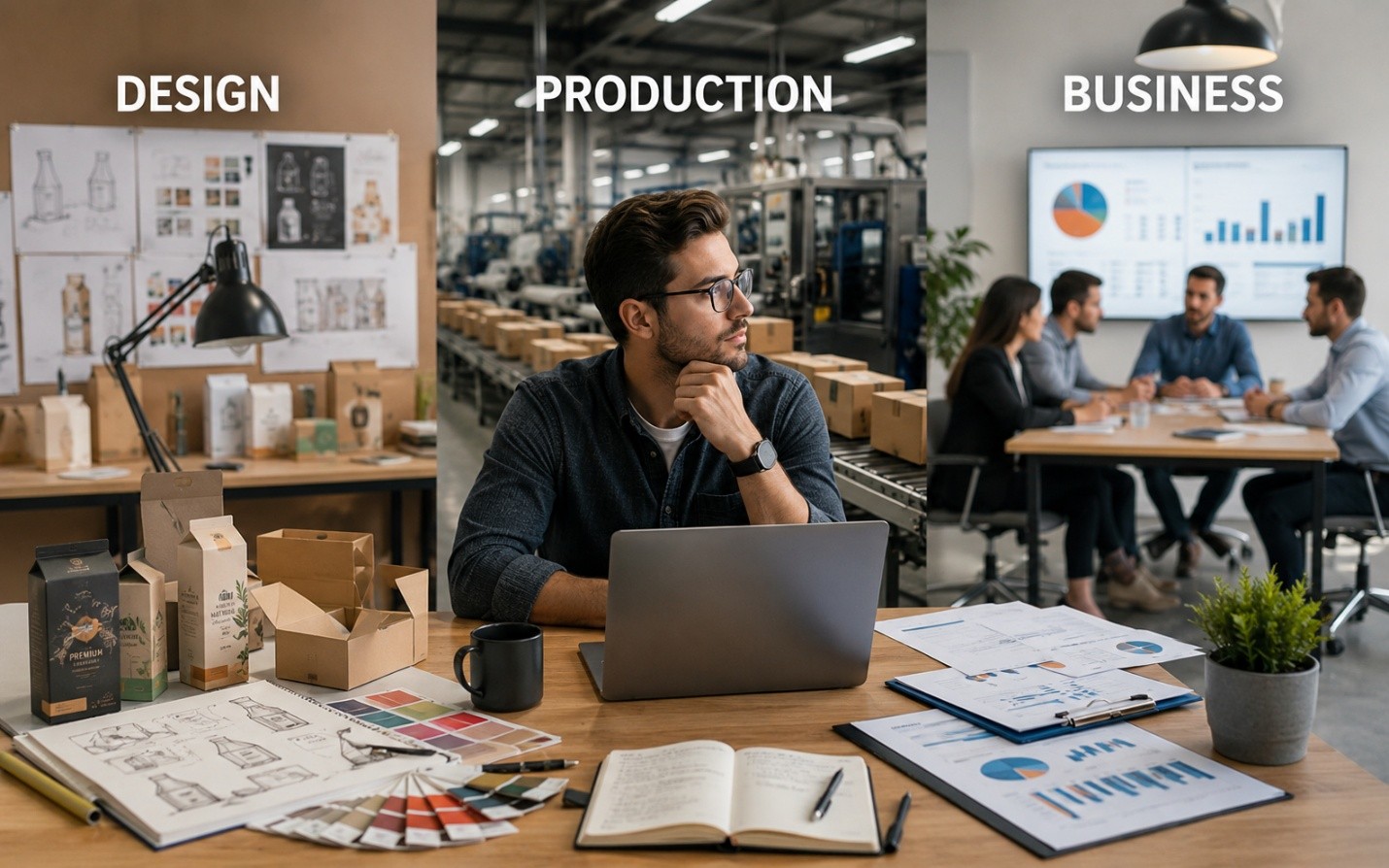
University students often learn design, manufacturing and business as separate subjects. In real working environment however these areas are connected more closely than textbooks normally explain. A designer makes decisions that affect production cost, production team influences final quality and business people must understand both sides before making promises to customers. Moving between these three areas can teach many professional lessons which are useful far beyond packaging industry.
For students thinking about careers in product development, manufacturing or custom packaging, understanding these connections early can make transition from classroom into workplace much easier.
- Design Is More Than Making Something Look Good
- Design students sometimes enter industry believing visual appearance is main target. Good colors typography and layout are important, but successful design also have to work physically.
- A creative idea may appear excellent on computer screen but become difficult when converted into real product.
- Designers need to think about materials, cutting lines printing methods, assembly and even transportation.
Learning to Design With Limitations
- One major lesson from moving between design and production is that limitations are not always enemy of creativity.
- Material thickness, printing technology, machinery size and budget can all limit what designer is able to produce.
- Working around these limits often creates more practical creativity.
- Student who understand technical limitations can design something which production team can actually manufacture without lots of changes.
Sometimes simple design works more better than complicated one. In industry you cannot only think "this looks nice." You must also thinking whether machine can make it properly.
- Production Teaches You Respect for Small Details
Production environment quickly shows how small errors become large problems. A difference of few millimeters, incorrect color setting or badly positioned fold could affect hundreds or thousands of finished products.
- Production teaches accuracy.
- It also teaches consistency because every unit needs to match approved specification.
- Workers must manage machines, materials, deadlines and quality checks together.
- Communication becomes extremely important when something unexpected happens.
What Students Can Learn From Manufacturing Teams
A person who spends time around actual production normally becomes better at making realistic decisions. Instead of assuming every design can be manufactured exactly as imagined they start asking better questions.
For example: Will this artwork stay readable after folding? Does this material support selected finish? Could changing structure save material? These type of questions connect creative thinking with technical reality.
For general examples of box structures, finishing choices and manufacturing terminology, students can look at zeepackaging.com as one industry reference. It can help show how design terms connect with physical packaging products without treating website as only promotional source.
- Business Changes How You Look at a Product
When someone moves from production into business side they begin seeing another layer of decisions. A technically perfect product can still fail when cost is too high or deadline is unrealistic.
Business Introduces Different Questions
- What does customer actually need?
Customer may ask for one thing while their main problem is something different.
- How much will project cost?
Material, labor printing shipping and waste all influence pricing.
- Can it be delivered on time?
Promising impossible deadline can damage relationship even if design itself is excellent.
- Will customer see value in solution?
Businesses must communicate benefits in simple words not only technical specifications.
This is where many young professional get surprised. They know product very well but explaining value to customer become a different skill.
- Communication Becomes the Most Transferable Skill
One of biggest lessons from working across design production and business is importance of communication.
A designer may say something in creative terminology while factory worker understands measurements and technical specifications. Salesperson may focus on price quantity and deadlines. All three people could be discussing same project but speaking almost different professional languages.
- Clear instructions reduce mistakes.
- Written specifications prevent confusion.
- Asking questions before production saves expensive corrections.
- Good communication also helps departments trust one another.
Learn How Different Teams Think
Students should try internships projects or part-time work where they interact with people outside their major. Graphic design student can learn from engineering department. Business student can visit production floor. Engineering student can sit with sales team.
When you understand how another department think, your own decisions become stronger. You dont need become expert of everything but should know enough for communicating correctly.
- Problems Are Usually Connected
Another important lesson is that workplace problems rarely belong to only one department.
Suppose customer says product looks different from approved sample. The cause might be design file, printing setup, material variation or even misunderstanding from sales conversation. Blaming one department fast does not solve problem.
A Better Problem-Solving Approach
- Identify what actually changed.
- Compare expected result with finished result.
- Trace process backward.
- Ask each department for information.
- Find root cause instead of simply finding person to blame.
- Create procedure that prevents same issue later.
This method is valuable in packaging but also software engineering, construction product design and many other industries.
- Understanding the Whole Process Makes Better Professionals
Students sometimes worry they need choose one specialty and never move outside it. Specialization is valuable, but understanding neighboring functions can make specialist much stronger.
A designer who understands production makes more manufacturable designs. A production manager who understands business knows why deadline matters. A salesperson who understands design and manufacturing avoids making promises company cannot complete.
The main lesson is not that everyone must perform every job. It is learning how your work affects next person in process.
Final Thoughts
Moving between design, production and business teaches that successful products are result of cooperation rather than one brilliant department. Creativity needs manufacturing knowledge, production needs accurate communication and business needs realistic understanding of both.
For university students this wider view can be very useful before entering professional life. Learn your main skill deeply but stay curious about departments around you. Career may start in one area and later move somewhere unexpected. The more you understand entire process the easier it becomes to solve problems, communicate with teams and make decisions that actually works.
...